
Guide
Alcohol and Memory: Why You Black Out, Why You Feel Foggy After You Stop, and How Much Comes Back
Joint Commission accredited · In network with most major insurance · Admissions answered 24 hours a day

Published September 30, 2026
Three different things get called “memory problems from drinking,” and they have three different answers. A blackout is a gap in memory for a night you were awake for, and those memories are not coming back. Brain fog in the first weeks after you stop is withdrawal, and it lifts. Slower thinking and a memory that does not hold what it used to is the cumulative effect of heavy drinking on the brain, and the studies that followed people through their first sober year say most of it recovers. This page takes the three in order, with the research behind each, and ends with the one form of alcohol-related memory loss that is a medical emergency.
Why does alcohol cause memory loss?
Alcohol causes blackouts by blocking the transfer of memories from short-term to long-term storage in the hippocampus. You stay awake and act, but the record is never written, so the memories cannot later be recovered.
That is the National Institute on Alcohol Abuse and Alcoholism’s account, and it separates two kinds. A fragmentary blackout, sometimes called a brownout or grayout, is the common one: islands of memory with missing stretches in between, where a cue from someone else can bring back a piece. An en bloc blackout is complete amnesia, often spanning hours, in which memories of events do not form and typically cannot be recovered; the institute’s phrase is that it is as if the events never occurred. Blackouts are not rare. A review in Alcoholism: Clinical and Experimental Research puts them at roughly 50 percent of drinkers, and they can happen to anyone at any age or level of drinking experience.
What makes them likely is how fast blood alcohol rises rather than simply how much is drunk: drinking on an empty stomach, drinking quickly, and binge drinking. Sleep and anxiety medications raise the risk further, and women reach higher peak blood alcohol levels faster than men on the same number of drinks, which is why they black out more readily.
Source: Interrupted Memories: Alcohol-Induced Blackouts, National Institute on Alcohol Abuse and Alcoholism.
What is the difference between blacking out and passing out?
Blacking out means being awake and active while the brain forms no memories; passing out means falling asleep or losing consciousness from drinking. A person can walk, talk, drive and argue in a blackout, and then pass out later.
The distinction matters because the blackout is the more dangerous state. Someone who has passed out is at least not doing anything. Someone in a blackout is making decisions with, as the institute puts it, impulse control, attention, judgment and decision-making all significantly impaired at the blood alcohol levels involved, and with no memory afterward of what those decisions were. The injuries, the drives, the fights and the sexual encounters people learn about the next morning happen in that window, which is why the institute describes blackouts as carrying a drastically increased risk of injury and other harms, and why the review above found their consequences extend beyond the drinking episode into psychiatric symptoms.
Source: Alcohol-Induced Blackouts: A Review of Recent Clinical Research with Practical Implications and Recommendations for Future Studies, Wetherill and Fromme, Alcoholism: Clinical and Experimental Research, 2016.
Are blackouts a sign of alcohol use disorder?
Not by themselves, but the institute’s position is that even one blackout is a reason for concern and a reason to talk to a health care provider about drinking. Repeated blackouts, blackouts on ordinary amounts, and drinking daily alongside them are the pattern that points to dependence.
The review of blackout research adds a finding that surprises people: individual differences, not just the amount of alcohol, determine who blacks out. Two people can drink the same amount and only one loses the night, and the one who does tends to do so again. That vulnerability is one reason blackouts cluster in people who are heading toward a problem, and it is also why “I only had a few” is not reassuring when the few produced a blackout. If blackouts are happening more than occasionally, the alcohol assessment page walks through the questions a clinician would ask, and the signs that someone has a drinking problem page is written for the person watching it happen to somebody else.
Why do you feel foggy after you stop drinking?
Brain fog after you stop drinking is withdrawal. The National Library of Medicine puts symptom onset within about eight hours of the last drink and the peak at 24 to 72 hours, and says sleep changes, rapid mood swings and fatigue may last for months.
Concentration and memory suffer for ordinary reasons in those weeks: sleep is broken, anxiety is high, the body is under physical stress, and the nervous system is re-learning to run without a sedative. None of that is brain damage, and all of it eases.
The measured version comes from a meta-analysis of 62 studies in Addiction Biology, which found moderate impairment across 11 of 12 cognitive domains in the first month of abstinence, including verbal memory, working memory, attention and processing speed, and across 10 domains between two and twelve months. That is the fog, quantified, and the same analysis is the source of the good news in the next section. The post-acute withdrawal page describes what those months feel like from the inside; the 30 days sober page describes the first of them.
Source: Alcohol withdrawal, MedlinePlus Medical Encyclopedia, National Library of Medicine.
Where we are
Detox centers across Texas
Three locations, each with its own admissions line and its own clinical team. Pick the one nearest you — or call and we will tell you which has a bed tonight.
-
 Inpatient
 Austin, TX
11711 N Lamar Blvd · 78753
- 15 beds
- On-site labs
- 24-hour medical staff
Drug & Alcohol Detox in Austin, TX
-
 Inpatient
 Houston, TX
1019 Ashland St · 77008
- On-site labs
- 24-hour medical staff
Drug Detox Center in Houston, TX
-
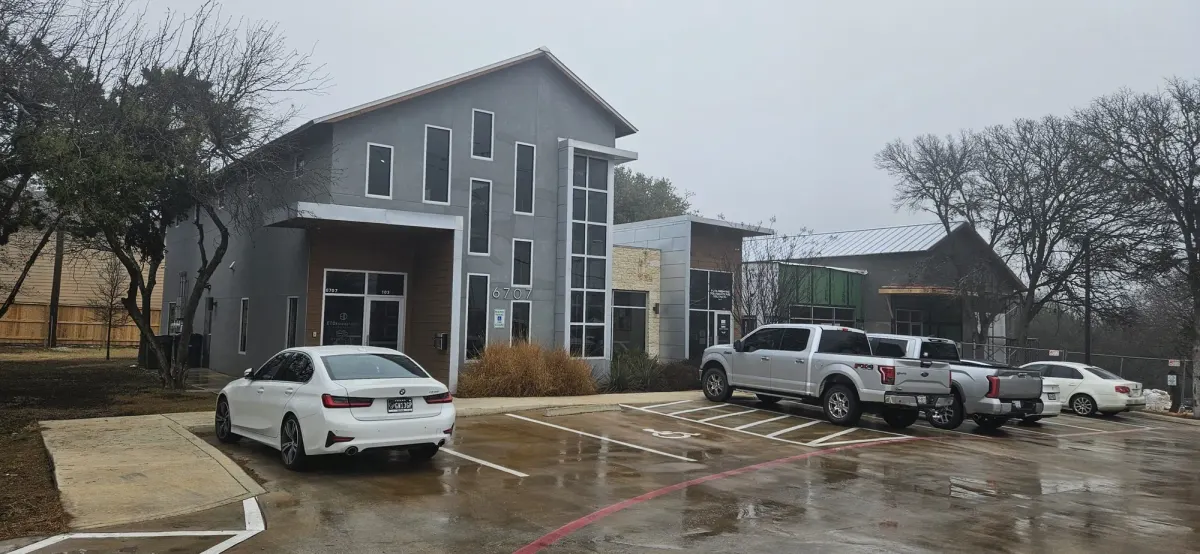 Outpatient
 San Antonio, TX
6707 W Hausman Rd · 78249
- Outpatient detox with scheduled medical visits
- Outpatient treatment
Outpatient Drug & Alcohol Detox in San Antonio
Does memory come back after you quit drinking?
Mostly, yes. A 2024 systematic review of longitudinal studies found that most cognitive functions, including memory, attention and executive function, recovered within 6 to 12 months of abstinence, and the meta-analysis above found that cognitive dysfunction generally abates by one year of sobriety.
The systematic review, in PLOS One, pooled 16 studies that followed 783 people with a diagnosed alcohol use disorder through abstinence. Basic processing speed and working memory recovered earliest; attention, executive function, perception and memory sub-domains recovered within the year; concept formation and reasoning recovered inconsistently. The Addiction Biology meta-analysis, which grouped people by how long they had been abstinent, found small residual effects after a year against the moderate impairment of the first months, and concluded that dysfunction generally abates by one year post-detoxification.
The National Institute on Alcohol Abuse and Alcoholism is more cautious in its wording, saying the extent of the brain’s ability to return to normal is not fully understood, but that a growing number of studies show at least some alcohol-induced changes in thinking, feeling and behaving can improve with abstinence.
Two honest limits. Blackout memories are the exception: what was never stored cannot be recovered, and no amount of sobriety returns a lost night. And every improvement in these studies belonged to people who stayed abstinent; the review’s own caveat is that few studies confirmed abstinence by anything beyond self-report, which is another way of saying that the recovery is conditional on the drinking actually stopping.
Source: Recovery of neuropsychological function following abstinence from alcohol in adults diagnosed with an alcohol use disorder: Systematic review of longitudinal studies, Powell et al., PLOS One, 2024; Widespread and sustained cognitive deficits in alcoholism: a meta-analysis, Stavro et al., Addiction Biology, 2013.
When is memory loss after drinking an emergency?
Memory loss is an emergency when it comes with confusion, an unsteady walk or abnormal eye movements in a heavy drinker. That is Wernicke’s disease, a thiamine deficiency that becomes permanent memory loss if it is not treated immediately.
Wernicke-Korsakoff syndrome is the form of alcohol-related brain damage that arrives as an emergency rather than as a slow decline. Heavy drinking depletes thiamine, vitamin B1, at the same time as poor nutrition stops replacing it, and the National Institute on Alcohol Abuse and Alcoholism describes the result as two disorders that occur together: Wernicke’s disease, whose muscle and vision problems are reversible with prompt thiamine, and Korsakoff’s psychosis, the severe memory disorder that follows untreated Wernicke’s and is not reversible. The institute estimates the syndrome goes undiagnosed in roughly 80 percent of the people who have it, partly because confusion in a person coming off alcohol is so easily blamed on the withdrawal.
The National Library of Medicine’s list of withdrawal emergencies applies here too: seizures, fever, severe confusion, hallucinations or an irregular heartbeat mean 911. A person who cannot remember the last few hours and is also confused or unsteady is not someone to let sleep it off. The wet brain and alcohol-related dementia page goes further into what the syndrome looks like and what recovers.
Source: Wernicke-Korsakoff Syndrome, National Institute on Alcohol Abuse and Alcoholism.
What helps memory recover?
Memory recovers with not drinking, the only intervention the studies measured and the one that works. Thiamine and food protect against the emergency form of damage, and sleep, time and treatment of depression or anxiety take care of the rest.
There is no supplement, program or exercise that has been shown to speed cognitive recovery beyond what abstinence alone produces, and the alcohol detox supplements page explains why the vitamin that genuinely matters, thiamine, is a matter of preventing Wernicke’s rather than sharpening memory.
What does help is ordinary: sleep, which is when memories are consolidated and which withdrawal disrupts for weeks; regular meals, because the same malnutrition that depletes thiamine starves the rest of the brain; and treatment for the depression and anxiety that often surface once alcohol is gone, because both impair attention and memory on their own. The institute’s summary of the brain in recovery rests on plasticity: the same adaptability that let the brain adjust to alcohol lets it adjust back, given time and the absence of the drug.
Source: Neuroscience: The Brain in Addiction and Recovery, Core Resource on Alcohol, National Institute on Alcohol Abuse and Alcoholism.
What does Briarwood do about memory and thinking in detox?
Briarwood gives thiamine from admission, and the physician who assesses each person is looking for the confusion and unsteadiness that mean Wernicke’s disease rather than ordinary withdrawal. That distinction has to be made in the first hours.
Medically supervised alcohol detox is usually five to seven days, and the fog described above is at its thickest inside them. Nursing observation around the clock is what catches a withdrawal delirium or a Wernicke’s picture that a person at home would be left to judge alone.
The rest of what helps memory, sleep, food and the treatment of what surfaces, begins in the stay and continues in the step after detox, which is arranged before discharge because the year of recovery the studies describe happens outside the building, not inside it. Cost and insurance covers what a stay costs with and without coverage. Admissions is answered at every hour, and if the question is whether someone’s confusion is withdrawal or something worse, the first call is the place to ask it.
Common Questions
Can you recover memories lost in a blackout?+–
Fragmentary blackout memories can sometimes be jogged by a cue, because pieces were stored. Memories from an en bloc blackout were never written and cannot be recovered; the National Institute on Alcohol Abuse and Alcoholism says it is as if the events never occurred.
How long does brain fog last after quitting drinking?+–
The acute withdrawal fog eases over the first weeks. Measured cognitive impairment is moderate in the first month and persists in a milder form for months; most functions recover within 6 to 12 months of abstinence, and dysfunction generally abates by one year.
Does short-term memory come back after you stop drinking?+–
For most people, yes. A 2024 systematic review of longitudinal studies found memory, attention and executive function recovering within 6 to 12 months of abstinence, with processing speed and working memory recovering earliest.
Why do I black out when I drink even when I do not feel that drunk?+–
Blackouts depend on how fast blood alcohol rises, not only on how much was drunk, and on individual vulnerability. Drinking fast, drinking on an empty stomach, sleep or anxiety medications, and being female all raise the risk at a given number of drinks.
Is memory loss from alcohol permanent?+–
Blackout memories are permanently lost. General cognitive impairment from heavy drinking mostly recovers with abstinence. Korsakoff's psychosis, the memory disorder that follows untreated Wernicke's disease, is permanent, which is why confusion in a heavy drinker is an emergency.
What are the signs of Wernicke's disease?+–
Confusion, an unsteady walk and abnormal eye movements in a person who drinks heavily. It is treated with thiamine by injection and is reversible if treated promptly; untreated it progresses to permanent memory loss. Call 911.
Related guides



About the people behind this guide
Anna-Grace Washington
Medical Content Writer
Anna-Grace Washington is a Medical Content Writer for Briarwood Detox Center. She holds a master’s degree in clinical psychology from the University of Texas and brings a strong understanding of behavioral health, addiction recovery, and evidence-based treatment concepts to her writing.
In network with most major insurance
Find your plan and see what detox would cost
Most plans cover medical detox. Coverage varies by plan, so we verify it for you before you commit to anything.



















Don't see your plan? We work with out-of-network benefits and offer self-pay options — (866) 710-7710
- Confidential
- Takes about 2 minutes
- No obligation to admit

- Accredited The Joint Commission
- Rated 4.7 · 183 Google reviews Flourishing Foundations Recovery, now part of Briarwood
- Admissions 24 hours a day