
Guide
Is a Medically Induced Coma Used for Alcohol Detox? No, and Here Is What Deep Sedation Is Actually For
Joint Commission accredited · In network with most major insurance · Admissions answered 24 hours a day

Published September 25, 2026
The question usually comes from a hope: that someone could be put to sleep on the first day and wake up on the last one, withdrawal over. It does not work that way, and no detox center offers it. Alcohol detox is done awake, with medication that keeps the nervous system from overshooting. Deep sedation on a ventilator exists in this field, but as an intensive-care rescue for the small number of people whose delirium tremens stops responding to standard medication, not as a way to skip the week. This page explains the difference, what deep sedation is actually for, why sleeping through withdrawal is not a shortcut, and what evidence-based alcohol detox looks like instead.
Is a medically induced coma used for alcohol detox?
No. Alcohol detox is done awake, with benzodiazepines dosed against a withdrawal score, and deep sedation is reserved for delirium tremens that does not respond to that medication, in an intensive care unit, as a rescue rather than a method.
The clinical reference StatPearls sets out the standard of care for delirium tremens, the most severe form of alcohol withdrawal: benzodiazepines are the most common and validated treatment, given either when symptoms appear or on a fixed schedule. Only when a person needs very large doses, or the delirium does not respond, does the reference move to the intensive care unit, phenobarbital alongside the benzodiazepine, or propofol alongside it, and it notes that propofol requires mechanical ventilation.
That last option is what a “medically induced coma” means in practice. It is the end of the escalation ladder for a life-threatening complication, reached by a minority of the 3 to 5 percent of people in withdrawal who develop delirium at all. It is never the starting point, and it is never offered as a way to make detox painless.
Source: Delirium Tremens, StatPearls, National Library of Medicine.
What is a medically induced coma?
A medically induced coma is deep unconsciousness produced on purpose with anesthetic-strength sedatives, most often propofol or a barbiturate, in an intensive care unit. A machine breathes for the person because the drugs suppress breathing.
It is a tool of intensive care, used when the brain needs to be shut down to protect it, as in some severe head injuries or seizures that will not stop, and it comes with everything a ventilator brings: a breathing tube, continuous monitoring, sedation that has to be lightened and deepened by an intensivist, and the risks of days on a machine.
In alcohol withdrawal specifically, a 2018 review of delirium tremens management describes benzodiazepines as the mainstay of treatment and names phenobarbital, propofol and dexmedetomidine as the options for cases that do not respond to them. Of those three, propofol is the one that produces a coma-like state and requires ventilation; the review and StatPearls treat it as the last resort for that reason.
Source: Delirium Tremens: Assessment and Management, Grover and Ghosh, Journal of Clinical and Experimental Hepatology, 2018.
When is deep sedation actually used in alcohol withdrawal?
Deep sedation is used when delirium tremens does not respond to benzodiazepines, when the doses needed require intensive-care monitoring, or when agitation threatens the airway. The intensive care team chooses the drug.
StatPearls describes the sequence. Benzodiazepine-refractory delirium tremens is treated with phenobarbital added to the benzodiazepine, or with propofol, which requires ventilation. Dexmedetomidine, a sedative that does not suppress breathing, can be added to a benzodiazepine without a ventilator, and a 2024 meta-analysis describes its potential advantage as exactly that: reducing the need for intubation and intensive-care admission. Every one of those decisions happens in a hospital, with the person already in delirium, and the goal is survival. Delirium tremens historically killed up to 20 percent of the people who developed it; with prompt diagnosis and treatment the rate is now around 1 percent, and the way that number was brought down was early benzodiazepines and close monitoring, not routine sedation.
The alcohol withdrawal seizures and DTs timeline page describes who is most at risk of reaching that point, and the hour-by-hour withdrawal timeline shows when it happens, most often 48 to 72 hours after the last drink.
Source: Dexmedetomidine as Adjunctive Therapy for the Treatment of Alcohol Withdrawal Syndrome: A Systematic Review and Meta-Analysis, Fiore et al., Pharmaceuticals, 2024.
Where we are
Detox centers across Texas
Three locations, each with its own admissions line and its own clinical team. Pick the one nearest you — or call and we will tell you which has a bed tonight.
-
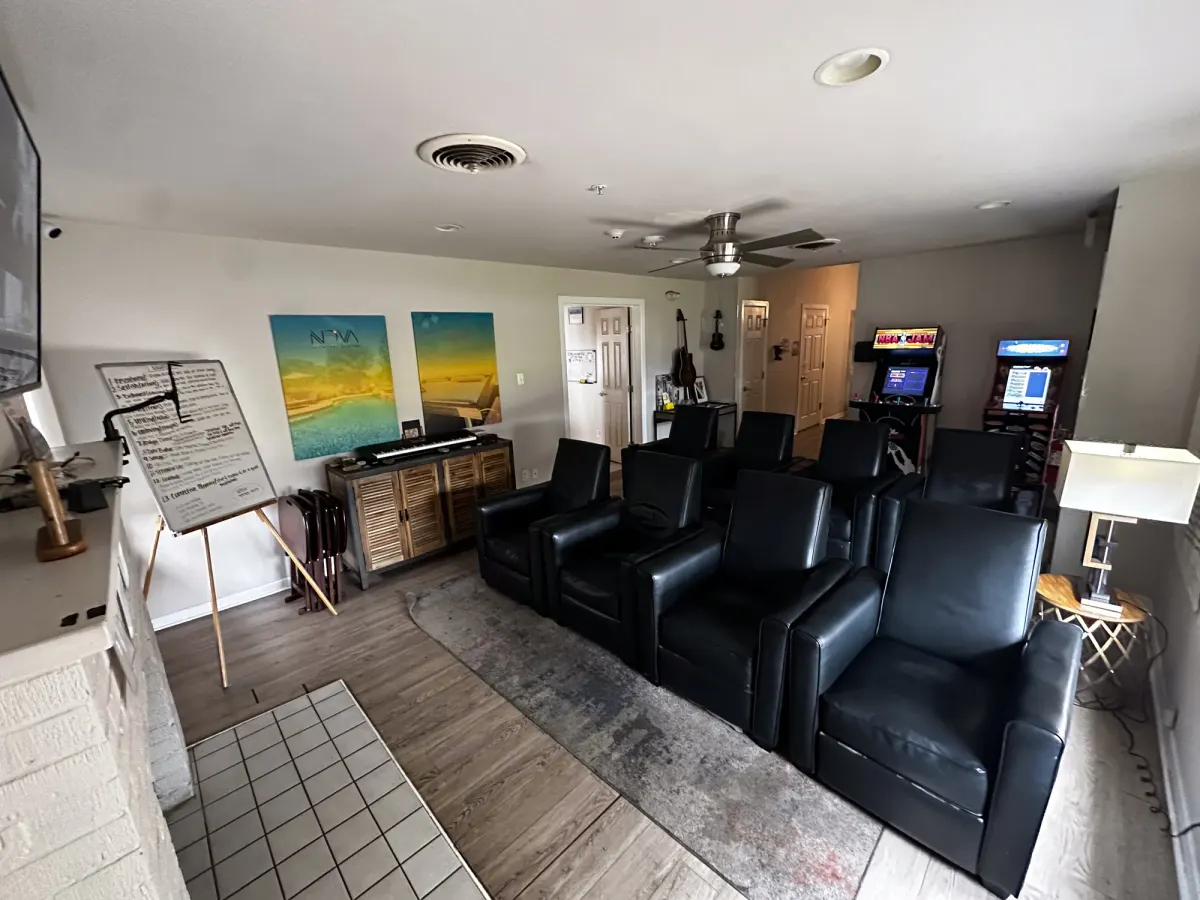 Inpatient
 Austin, TX
11711 N Lamar Blvd · 78753
- 15 beds
- On-site labs
- 24-hour medical staff
Drug & Alcohol Detox in Austin, TX
-
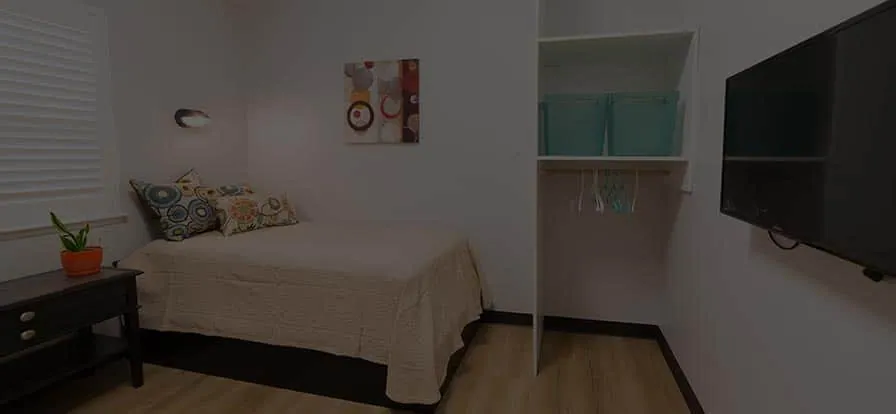 Inpatient
 Houston, TX
1019 Ashland St · 77008
- On-site labs
- 24-hour medical staff
Drug Detox Center in Houston, TX
-
 Outpatient
 San Antonio, TX
6707 W Hausman Rd · 78249
- Outpatient detox with scheduled medical visits
- Outpatient treatment
Outpatient Drug & Alcohol Detox in San Antonio
Why is sleeping through withdrawal not a shortcut?
Sedating a person through withdrawal does not shorten it, adds the risks of a ventilator and an intensive care stay, and does nothing about the addiction. The one version ever tested, anesthesia-assisted opioid detox, was abandoned.
Alcohol withdrawal runs on its own clock: the nervous system’s overactivity peaks at about 72 hours and settles over five to seven days whether or not the person is conscious. Sedation masks the symptoms; it does not remove the process, and when the sedation is lightened the withdrawal is where it would have been anyway. What a coma adds is the breathing tube, the risk of pneumonia and other complications of ventilation, and the need for an intensivist, all for a condition that in most people is managed safely on a detox floor with a nurse and a withdrawal score.
The nearest thing to “sleep through detox” that was ever studied properly is the opioid version. A randomized trial at Columbia compared anesthesia-assisted heroin detox with two standard, awake methods. Withdrawal severity was the same across all three, the anesthesia group was retained in treatment no better at twelve weeks, and the anesthesia procedure produced three potentially life-threatening adverse events. The authors concluded that the data do not support general anesthesia for detoxification. The rapid detox page covers that history, and Briarwood does not offer it for any substance.
Source: Anesthesia-assisted vs buprenorphine- or clonidine-assisted heroin detoxification and naltrexone induction: a randomized trial, Collins et al., JAMA, 2005.
What does evidence-based alcohol detox look like instead?
Evidence-based alcohol detox is an awake, monitored stay of about five to seven days: a benzodiazepine dosed against a withdrawal score, thiamine and fluids from admission, and vital signs checked through the 72-hour peak. The person is watched throughout for the signs that would mean escalation.
StatPearls describes the components: a validated scale to grade severity, with mild withdrawal a score of 8 or less and severe above 15; benzodiazepines given on a fixed schedule with extra doses for high scores, or purely by symptoms; diazepam first unless the liver is a concern, then lorazepam; a loading dose for people already severe or at highest risk; and thiamine, folate, magnesium and phosphate replaced because heavy drinkers are usually short of them. The National Library of Medicine adds the setting rule: moderate to severe withdrawal is treated in a hospital or a facility that treats alcohol withdrawal, with close watching for hallucinations and delirium.
That is the whole method. It is not dramatic, and it works because it starts before the peak rather than after a crisis: the same reference notes that treatment with benzodiazepines reduces the risk of progression to seizures and delirium. The alcohol detox page describes how Briarwood runs it, and which medications are used covers the drugs in more detail.
Source: Alcohol Withdrawal Syndrome, StatPearls, National Library of Medicine.
When does alcohol withdrawal need a hospital rather than a detox center?
Alcohol withdrawal needs a hospital when delirium tremens has begun or is likely, when a seizure has occurred, or when serious medical illness runs alongside the withdrawal. Doses that require intensive-care monitoring belong there too.
A freestanding detox center is built for the large majority of alcohol withdrawal, including severe withdrawal caught early, and not for the intensive-care end of it. The assessment on admission, which asks about previous withdrawals, seizures, delirium, liver disease and other illness, is what sorts one from the other, and anyone whose history says intensive care is likely belongs in a hospital from the start. The National Library of Medicine’s emergency list applies at home and on a detox floor alike: seizures, fever, severe confusion, hallucinations or an irregular heartbeat mean emergency care.
For everyone else, and that is most people, the answer to “is there a way to be put under for this” is that there is something better: a nurse who has watched day three many times, medication given before the peak rather than after it, and a bed to sleep in when the sedative lets you.
Admissions is answered at every hour, and the first call is the right place to ask which setting your history points to. Cost and insurance covers what a stay costs with and without coverage.
Source: Delirium tremens, MedlinePlus Medical Encyclopedia, National Library of Medicine.
Common Questions
Can you be put in a medically induced coma for alcohol withdrawal?+–
Only as an intensive-care rescue for delirium tremens that does not respond to benzodiazepines, using propofol with mechanical ventilation. It is not offered as a detox method, and no detox center provides it.
Is there a way to sleep through alcohol detox?+–
No. Sedation masks the symptoms but does not shorten the withdrawal, which peaks at about 72 hours and settles over five to seven days on its own clock. Medication during detox helps you sleep at night; it does not put you under for the week.
What is used instead of a coma for severe alcohol withdrawal?+–
Benzodiazepines dosed against a withdrawal score, with phenobarbital added for cases that do not respond, and dexmedetomidine as an add-on that does not require a ventilator. Propofol, which does, is the last resort.
How dangerous is delirium tremens?+–
Historically it killed up to 20 percent of the people who developed it. With prompt diagnosis and treatment the rate is now around 1 percent. It affects about 3 to 5 percent of people in alcohol withdrawal and most often begins 48 to 72 hours after the last drink.
Does Briarwood offer sedated or rapid detox?+–
No. Briarwood runs awake, monitored alcohol detox of usually five to seven days, and does not offer anesthesia-assisted or sedated detox for any substance. A person whose withdrawal needs intensive care belongs in a hospital, and the admission assessment is designed to identify that before it happens.
Related guides

About the people behind this guide
Anna-Grace Washington
Medical Content Writer
Anna-Grace Washington is a Medical Content Writer for Briarwood Detox Center. She holds a master’s degree in clinical psychology from the University of Texas and brings a strong understanding of behavioral health, addiction recovery, and evidence-based treatment concepts to her writing.
In network with most major insurance
Find your plan and see what detox would cost
Most plans cover medical detox. Coverage varies by plan, so we verify it for you before you commit to anything.



















Don't see your plan? We work with out-of-network benefits and offer self-pay options — (866) 710-7710
- Confidential
- Takes about 2 minutes
- No obligation to admit

- Accredited The Joint Commission
- Rated 4.5 · 95 Google reviews
- Admissions 24 hours a day