
Guide
Can You Leave Detox or Rehab Early? What Texas Law Says, What "Against Medical Advice" Means, and When Leaving Is Dangerous
Joint Commission accredited · In network with most major insurance · Admissions answered 24 hours a day

Published September 29, 2026
People ask this question from two places. Some are about to check in and want to know whether they are signing away the right to walk out. Some are three days in, feeling better, and wondering whether the rest is necessary. The honest answer is the same for both: if you admitted yourself, you can leave, and Texas law says so in writing. What the law cannot tell you is whether leaving on that particular day is safe, because for alcohol and benzodiazepines the day people feel ready to go is often the day the danger peaks, and for opioids the hour after leaving is the most lethal of the whole process.
This page covers the law, what “against medical advice” actually means, why people leave, when it is dangerous, and what to do instead.
Can you leave an inpatient treatment program early?
Yes. In Texas, a facility must release a voluntary patient within a reasonable time, and no more than 96 hours, after the patient asks in writing to be released. Voluntary detox and rehab are not confinement.
The rule is Section 462.023 of the Texas Health and Safety Code, the chapter that governs treatment for chemical dependency. It applies to anyone admitted under the voluntary-admission section, which is how nearly everyone enters a private detox or rehab program: you request admission, you consent to treatment, and you keep the right to withdraw that consent. The 96 hours is a ceiling, not a waiting period; a facility that has no medical or legal reason to hold you releases you the same day. The written request matters because it is what triggers the clock and what protects the facility when it lets you go, and any program will hand you the form when you ask.
Source: Texas Health and Safety Code, Chapter 462, Section 462.023, Discharge or Release, Texas Legislature.
Can a detox center keep you against your will?
Only through a court. A voluntary patient can be held past a release request only if they withdraw the request, if an application for court-ordered treatment or emergency detention is filed and they are detained under that chapter, or if they are under 16 and the parent who admitted them objects in writing.
Those are the three exceptions Section 462.023 lists, and the court route is narrow on purpose. Section 462.024 says an application for court-ordered treatment cannot be filed against a voluntary patient at all unless a release request has been filed, or the treating physician believes the patient meets the criteria for court-ordered treatment and is absent without authorization, unable to consent, or refusing necessary treatment, and completes a certificate of medical examination saying so.
Court-ordered chemical dependency treatment in Texas requires a judge, a hearing, and evidence that a person is a danger to themselves or others or is likely to suffer serious harm without it. It is not something a detox center decides on its own.
What a facility can do is talk to you, and it will. The physician or nurse will explain what they see in your chart, what they expect in the next 48 hours, and what they recommend. That conversation is not a hold. It is the part of the process that is actually for you.
Source: Texas Health and Safety Code, Chapter 462, Section 462.024, Texas Legislature.
What does leaving against medical advice mean?
Leaving against medical advice, or AMA, means the treating clinician has recommended that you stay and you have chosen to go; the facility documents the recommendation, the risks it explained, and your decision. It is a medical record, not a penalty, and it does not void your insurance.
The insurance claim deserves its own sentence because it is repeated constantly and it is false. Researchers at the University of Chicago reviewed 46,319 admissions over ten years, found 526 discharges against medical advice, and checked what insurers did: among insured patients, payment was refused in 4.1 percent of cases, every refusal was administrative, such as a wrong name on the claim, and not one was because the patient left AMA. Yet 69 percent of the residents and 44 percent of the attending physicians they surveyed believed insurance denies payment for AMA discharges, and many told patients so. The paper’s title calls it a medical urban legend.
If someone tells you that walking out means paying for the whole stay yourself, that is the myth talking.
What AMA does do is create a record. Your chart will say you left before the recommended discharge and what you were told. If you come back, that history helps the next team understand where the last attempt stopped. It is also worth knowing that the same research literature that studies AMA discharges finds them associated with higher readmission and higher death rates in the following month, which is the subject of the next two sections.
Source: Financial responsibility of hospitalized patients who left against medical advice: medical urban legend?, Schaefer et al., Journal of General Internal Medicine, 2012.
Why do people leave treatment early?
People leave early because withdrawal is undertreated, pain is uncontrolled, they feel judged, or the rules feel like confinement. The fifth reason is feeling better on day two or three, which reads as being done when it is not.
Those first four reasons come from a Massachusetts General Hospital study that interviewed patients with substance use disorders who had left the hospital against medical advice and asked them why. Undertreated withdrawal and ongoing craving came first, then acute and chronic pain that was not managed, then stigma and discrimination from staff, then restrictions such as not being allowed off the floor; patients with a history of incarceration said the setting reminded them of it. The authors note that patients with substance use disorders are up to three times as likely to leave AMA as other patients, and that these discharges are associated with increased thirty-day mortality and readmission.
A systematic review of the same problem among people who inject drugs put the rate of leaving against medical advice at 25 to 30 percent, and found that social support, older age and treatment of withdrawal with methadone in the hospital all made leaving less likely.
Every one of those reasons is a reason to talk to the nurse, not to pack. Undertreated withdrawal is a dosing problem, and the medication can be adjusted. Pain is a treatable complaint. Feeling judged is worth saying out loud, because a good program would rather hear it than lose you. The fifth reason, the one that does not come from stigma or discomfort, is the one this page turns to next: the sense of being finished that arrives before the process is.
Source: Understanding why patients with substance use disorders leave the hospital against medical advice: A qualitative study, Simon et al., Substance Abuse, 2020; Leaving the Hospital Against Medical Advice Among People Who Use Illicit Drugs: A Systematic Review, Ti and Ti, American Journal of Public Health, 2015.
Where we are
Detox centers across Texas
Three locations, each with its own admissions line and its own clinical team. Pick the one nearest you — or call and we will tell you which has a bed tonight.
-
 Inpatient
 Austin, TX
11711 N Lamar Blvd · 78753
- 15 beds
- On-site labs
- 24-hour medical staff
Drug & Alcohol Detox in Austin, TX
-
 Inpatient
 Houston, TX
1019 Ashland St · 77008
- On-site labs
- 24-hour medical staff
Drug Detox Center in Houston, TX
-
 Outpatient
 San Antonio, TX
6707 W Hausman Rd · 78249
- Outpatient detox with scheduled medical visits
- Outpatient treatment
Outpatient Drug & Alcohol Detox in San Antonio
When is leaving early dangerous?
Leaving early is dangerous in the first three to five days of alcohol withdrawal, at any point in a benzodiazepine taper, and in the hours after any opioid detox. Those are the windows for seizures, delirium tremens and fatal overdose.
Alcohol is the clearest case, because the timing is so well charted. Withdrawal peaks around 72 hours after the last drink, seizures are most likely in the first two days, and delirium tremens most often begins at 48 to 72 hours and can start as late as day five. The first night’s shaking and nausea usually ease by day two, and that is exactly when people decide they are through the hard part. They are walking out into the peak.
The National Library of Medicine’s rule is that moderate to severe alcohol withdrawal belongs in a hospital or a facility that treats it, with close watching for hallucinations and delirium, and that death is possible, especially if delirium tremens occurs. The hour-by-hour alcohol withdrawal timeline shows the windows; the seizures and DTs page shows who is most at risk.
Benzodiazepines are the slow version of the same danger. The taper runs for weeks, the seizure risk is tied to stopping abruptly, and a person who leaves mid-taper with a bottle of the drug they were dependent on has recreated the situation they came in to end. The benzodiazepine detox page explains why the taper cannot be rushed.
Opioids are different and, in one respect, worse. Opioid withdrawal itself is rarely fatal, but the National Library of Medicine is explicit about what follows it: most opioid overdose deaths occur in people who have just detoxed, because withdrawal reduces tolerance and a dose that was routine a week ago can now be fatal. Leaving an opioid detox on day three and using that night is the single most dangerous act in the whole sequence, and it is the reason the opioid detox page spends so much time on what continues after the stay.
Stimulants are the exception. Methamphetamine and cocaine withdrawal are not medically dangerous in the way the others are; what makes leaving early risky there is the depth of the depression in the first days and the paranoia that can persist, which is a psychiatric matter rather than a seizure risk. The meth recovery timeline covers it.
Source: Opiate and opioid withdrawal and Alcohol withdrawal, MedlinePlus Medical Encyclopedia, National Library of Medicine.
What should you do instead of leaving?
Say what is wrong before you say you are leaving, because the four reasons people give are all things a program can change. Then ask for the next step to be arranged before you go; a plan for after detox is the strongest known predictor of finishing it.
That last point has a number behind it. A Swedish detox ward reviewed 122 inpatient opioid detoxifications and found that 34 percent ended in dropout against medical advice. In the analysis, having an inpatient plan for after detox, residential treatment rather than going home to outpatient care, cut the odds of dropping out by more than half; younger patients were most likely to leave. The authors’ conclusion is that patients benefit from a higher degree of post-detox planning. In plain terms: people who know where they are going next stay long enough to get there.
So the order of operations is this. If you are shaky, sweating, in pain or not sleeping, tell the nurse; those are dose questions. If the setting or the staff are the problem, say so; a program can adjust a schedule, a roommate or an approach. If you have completed the acute phase and are medically stable, ask whether stepping down to outpatient care is an option rather than leaving outright; for some people it is, and it keeps the medical relationship intact.
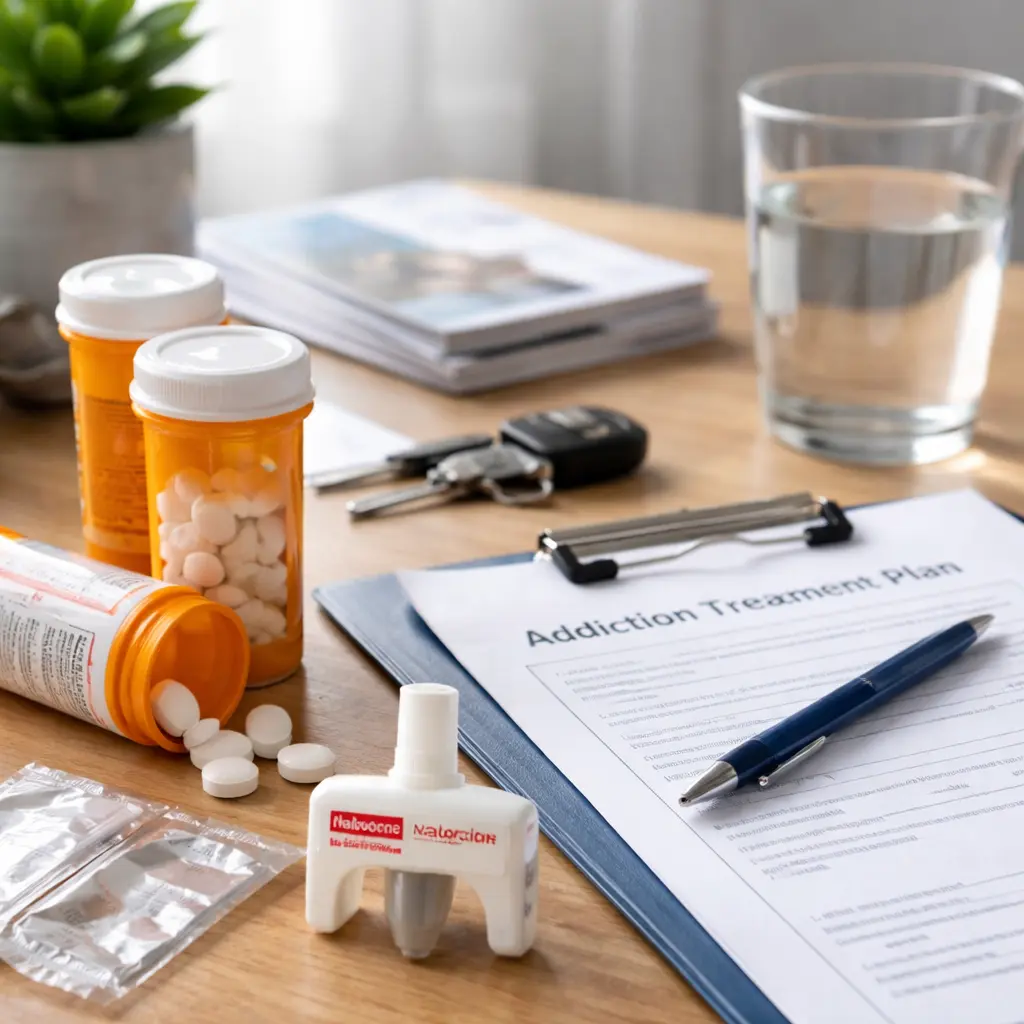
And if you are going to leave regardless, do it with a plan: naloxone in your pocket if opioids are involved, a first outpatient appointment on the calendar, and a phone number for the program, because the National Institute on Drug Abuse’s position is that a return to use is a signal to resume or adjust treatment, not proof that it failed. A program that treated you once will take the call.
Source: Predictors of dropout from inpatient opioid detoxification with buprenorphine: a chart review, Hakansson and Hallén, Journal of Addiction, 2014; Treatment and Recovery, National Institute on Drug Abuse.
How does Briarwood handle it?
Briarwood’s detox is voluntary. A person who wants to leave is told plainly what the physician expects in the next two days, offered the alternatives above, and released with the written request the law describes if they still choose to go.
Stays are short by design: alcohol and opioid detox usually run five to seven days, benzodiazepine detox longer because of the taper, and methamphetamine detox is often 24 to 72 hours of observation through the crash. The how long detox takes page sets out each. The first days are the reason the stay exists, and they are also when the urge to leave is strongest, so the clinical team’s job in those days is partly medical and partly this conversation.
The step after detox, whether residential treatment, an intensive outpatient program in Austin, Houston or San Antonio, or sober living, is arranged from the first day rather than the last, which is the thing the Swedish study says keeps people in the building. Cost and insurance covers what a stay costs with and without coverage. Admissions is answered at every hour, and the question of whether you can leave is one they would rather answer before you check in than after, so ask it.
Common Questions
Can you leave rehab whenever you want?+–
If you admitted yourself, yes. In Texas a facility must release a voluntary patient within a reasonable time, and no more than 96 hours, after a written request. The exceptions are withdrawing the request, a court-ordered treatment or emergency detention application, and a minor under 16 whose parent objects.
Can you check yourself out of detox?+–
Yes, but the timing matters. Alcohol withdrawal peaks around 72 hours and delirium tremens can begin as late as day five, so leaving on day two or three means leaving during the most dangerous window. Ask the physician what the next 48 hours look like before you decide.
What happens if you leave rehab against medical advice?+–
The clinician documents the recommendation to stay, the risks explained, and your decision, and you sign a form or the refusal is noted. It is a medical record, not a penalty. A ten-year study found no insurer that refused payment because a patient left AMA.
Does insurance refuse to pay if you leave AMA?+–
No. Among 526 AMA discharges in a ten-year review, payment was refused in 4.1 percent of cases, all for administrative reasons, and none because the patient left. Most physicians surveyed believed otherwise; the study calls it a medical urban legend.
Can a rehab hold you against your will in Texas?+–
Not on its own. Holding a voluntary patient past a release request requires a court-ordered treatment or emergency detention application under the Texas Health and Safety Code, which needs a judge and a physician's certificate, not a program's decision.
Is it dangerous to leave opioid detox early?+–
The withdrawal itself rarely is, but the hours after are. Most opioid overdose deaths occur in people who have just detoxed, because tolerance has dropped and a former routine dose can be fatal. Leave with naloxone and a next appointment, or better, stay and let the plan be arranged.
Related guides


About the people behind this guide
Anna-Grace Washington
Medical Content Writer
Anna-Grace Washington is a Medical Content Writer for Briarwood Detox Center. She holds a master’s degree in clinical psychology from the University of Texas and brings a strong understanding of behavioral health, addiction recovery, and evidence-based treatment concepts to her writing.
In network with most major insurance
Find your plan and see what detox would cost
Most plans cover medical detox. Coverage varies by plan, so we verify it for you before you commit to anything.



















Don't see your plan? We work with out-of-network benefits and offer self-pay options — (866) 710-7710
- Confidential
- Takes about 2 minutes
- No obligation to admit

- Accredited The Joint Commission
- Rated 4.7 · 183 Google reviews Flourishing Foundations Recovery, now part of Briarwood
- Admissions 24 hours a day