
Our programsWhat we treat
Synthetic Drug Detox: K2, Spice, Bath Salts and the Drugs Nobody Can Name
Supervised detox for synthetic cannabinoids, cathinones and other designer drugs in Austin and Houston, where the first job is finding out what was taken.
Admissions answered 24 hours a day · Most major insurance accepted
Includes reviews of Flourishing Foundations Recovery, now part of Briarwood
The essentials
Synthetic drug detox, in short
Supervised detox for synthetic cannabinoids, cathinones and other designer drugs in Austin and Houston, where the first job is finding out what was taken.
Not sure if you need detox?
A nurse can tell you in one call. Free, confidential, and answered around the clock.
At a glance
Texas · Medical detox
- What this is
- Medically supervised synthetic drug detox
- Supervision
- Licensed medical staff on site, 24 hours a day
- Starts with
- A medical assessment, before anything is recommended
- Locations
- Austin · Houston · San Antonio
- Admissions
- (866) 710-7710 — answered 24 hours a day
- Insurance
- In network with most major carriers; benefits verified free
- After detox
- The next step is arranged before you leave
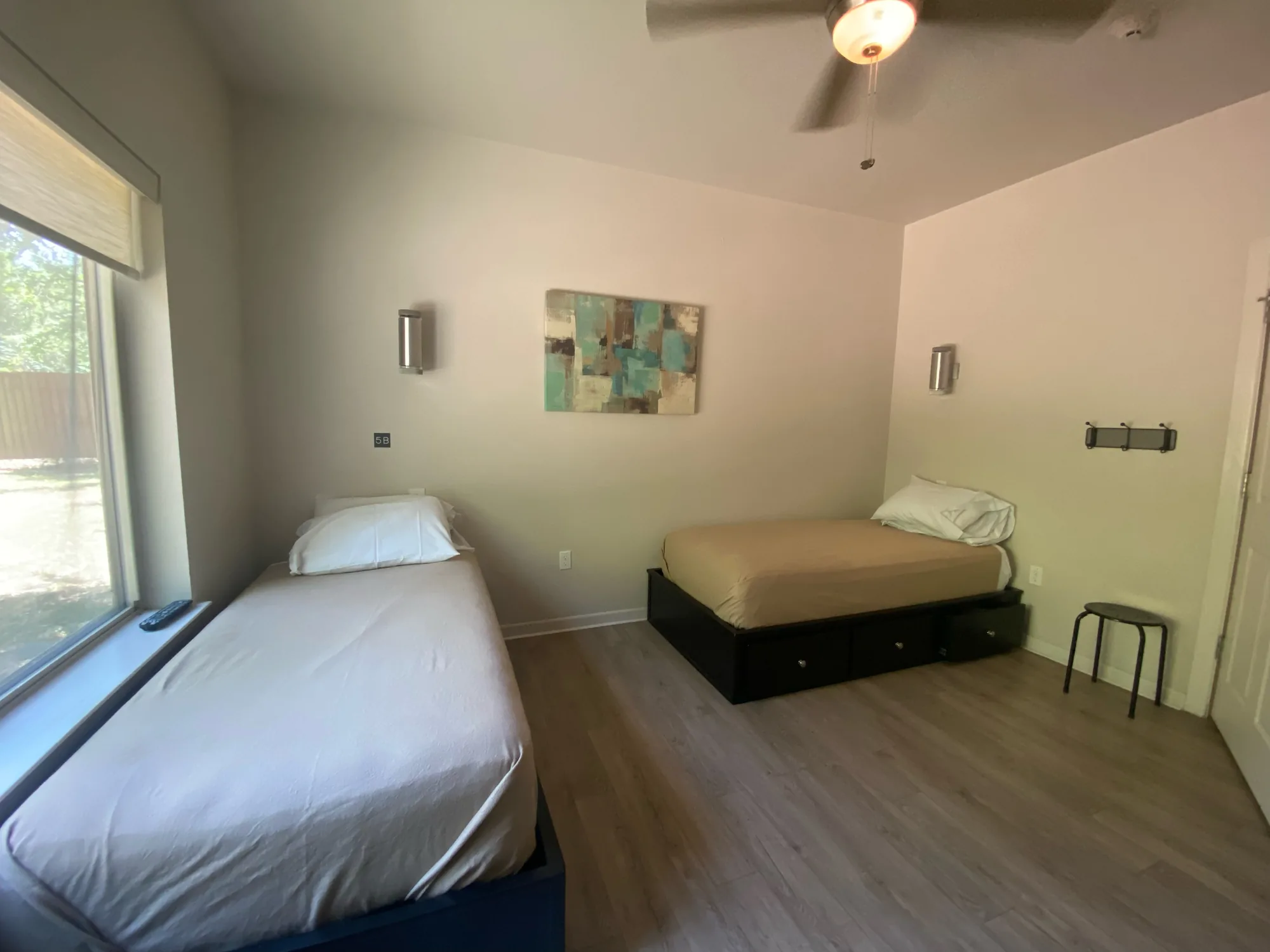
Before you arrive: what to expect from our detox covers the medical assessment, how long a stay usually runs, the privacy options and the rooms themselves.
Coverage
Our center is in-network with many insurances
Type your plan below to check it, or call and we will verify your benefits with your insurer directly. Free, and with no obligation to admit.



















Takes about two minutes · Or call (866) 710-7710

- Accredited The Joint Commission
- Rated 4.7 · 183 Google reviews Flourishing Foundations Recovery, now part of Briarwood
- Admissions 24 hours a day
Synthetic drugs are the ones sold as something else: K2 and Spice as “legal weed”, bath salts and flakka as “plant food” or “research chemicals”, pressed pills as oxycodone that turn out to be fentanyl. What they share is that the person taking them rarely knows the compound or the dose, and neither, at first, does the clinician. That is what makes synthetic drug detox different from every other page in this section, and it is why the answer to most questions about it begins with an assessment. Briarwood runs medically supervised detox for synthetic drugs in Austin and Houston. This page explains what that involves.
What counts as a synthetic drug?
Synthetic drugs are laboratory-made compounds designed to mimic other drugs, mainly synthetic cannabinoids such as K2 and Spice, synthetic cathinones such as bath salts and flakka, and synthetic opioids such as fentanyl and its analogs.
The National Institute on Drug Abuse groups most of these as new psychoactive substances: unregulated, mind-altering chemicals that appear on the market faster than they can be studied or scheduled. Synthetic cannabinoids are chemicals sprayed on plant material or sold as liquid for vaping, marketed as a legal alternative to marijuana; the institute is blunt that they are not safe, may act on the brain far more powerfully than marijuana, and that their effects can be unpredictable and in some cases life-threatening.
Synthetic cathinones are stimulants related to a compound in the khat plant, sold as bath salts, jewelry cleaner or phone-screen cleaner and labeled “not for human consumption”. Synthetic opioids are covered on the opioid detox page, because fentanyl withdrawal follows the opioid pattern and has an opioid treatment.
The common thread is that the chemical composition changes from batch to batch, so two packets with the same name can contain different compounds at different strengths. A person who has used one for months has, in effect, been taking an unknown drug at an unknown dose.
Source: Synthetic Cannabinoids (K2/Spice) DrugFacts, National Institute on Drug Abuse, 2020.
Do I need medical detox for synthetic drugs?
You need medical detox for synthetic drugs if you cannot stop without severe symptoms, have had a toxic reaction, or are also using alcohol, benzodiazepines or opioids. The presentation is unpredictable, and the withdrawal is often not the only problem.
The case for supervision is different here than for alcohol or benzodiazepines, where the withdrawal itself is the danger. With synthetic drugs the danger is the unknown: what was in the last batch, whether a toxic reaction is still developing, whether there is an underlying psychosis that the drug caused or uncovered, and what else is being used.
The National Institute on Drug Abuse notes that synthetic cannabinoid products have been found laced with fentanyl without the user knowing, which turns a stimulant or cannabinoid withdrawal into an opioid one. Medical observation for the first days answers those questions while treating whatever appears. Where synthetic drugs are the only thing involved and the symptoms are mild, an outpatient assessment may be enough; a nurse can tell you which on the first call.
What are synthetic drug withdrawal symptoms?
Synthetic drug withdrawal symptoms depend on the class: headaches, anxiety, depression and irritability after synthetic cannabinoids, and depression, anxiety, tremors, sleep problems and paranoia after synthetic cathinones.
Those are the two lists the National Institute on Drug Abuse publishes. Synthetic cannabinoids are addictive, and regular users trying to quit report headaches, anxiety, depression and irritability. Synthetic cathinones produce intense, uncontrollable urges to use again and strong withdrawal symptoms including depression, anxiety, tremors, problems sleeping and paranoia. Both withdrawals are mostly psychological, like the withdrawal from the drugs they imitate, and the depression and paranoia are the parts that need watching. The acute intoxication that often brings people in is a separate and more dangerous picture, covered below.
Source: Synthetic Cathinones (“Bath Salts”) DrugFacts, National Institute on Drug Abuse, 2020.
How long does synthetic drug withdrawal last?
Synthetic drug withdrawal has no research-established timeline, because the compounds change too fast to study; in practice acute symptoms appear within a day of stopping and psychological symptoms run days to weeks.
This page will not give you a day-by-day table, because none exists that would be honest. The federal fact sheets describe the symptoms but not their duration, and for a category where the drug in the packet changes from month to month, a duration figure from one study would not transfer to the next batch.
What clinicians observe is the pattern of the parent drug: a stimulant-like crash of exhaustion, low mood and disturbed sleep after cathinones, and a cannabis-like irritability, anxiety and sleeplessness after synthetic cannabinoids, both fading over one to a few weeks. Where the depression or paranoia does not fade, the question becomes whether the drug uncovered a condition that needs its own treatment, and the assessment for that is part of detox.
Why is synthetic drug detox unpredictable?
Synthetic drug detox is unpredictable because the compound and dose are unknown, and because acute intoxication can bring toxic reactions, seizures, kidney damage, dangerous agitation and psychosis. Those have to be managed before withdrawal is even the issue.
The National Institute on Drug Abuse lists the severe effects seen in emergency rooms after synthetic cannabinoid use: rapid heart rate, vomiting, violent behavior and suicidal thoughts, with overdoses causing toxic reactions, raised blood pressure, reduced blood supply to the heart, kidney damage and seizures. For synthetic cathinones it describes paranoia, hallucinations, panic attacks and excited delirium, extreme agitation with violent behavior, and notes that people in that state often suffer dehydration, breakdown of skeletal muscle tissue and kidney failure, with the worst outcomes after snorting or injecting. Intoxication has resulted in death.
Someone in that state belongs in an emergency department first, not a detox center, and admissions will say so. Detox begins once the acute reaction is over and the person is medically stable. What detox then watches for is the tail of those effects, the return of psychosis or agitation as sleep deprivation catches up, and the unknown second substance.
What happens during synthetic drug detox at Briarwood?
Synthetic drug detox at Briarwood begins with a medical and psychiatric assessment, then supervised observation with round-the-clock vital signs, medication for the symptoms that appear, and a treatment plan arranged before discharge.
The assessment asks what was taken, in what form, how often, what it was sold as and where, and what else is being used, including alcohol and prescriptions. It looks for the after-effects of the acute reactions above, including dehydration, muscle damage and kidney function, and it screens for a co-occurring mental health condition, which the National Institute on Drug Abuse says providers should do for both classes of drug.
From there the stay is observation and symptom management: medication for sleep, anxiety and agitation as needed, hydration and nutrition, and psychiatric monitoring for paranoia or psychosis that persists past the first days. A detox counselor meets with you individually and in group. The what to expect page covers the rooms, the routine and what to bring.
Are there medications for synthetic drug withdrawal?
No medication is approved for synthetic drug withdrawal or addiction: the National Institute on Drug Abuse says treatments have not been tested for synthetic cannabinoids and names behavioral therapy for synthetic cathinones.
That is worth saying plainly because some centers imply otherwise. What medication does during synthetic drug detox is treat symptoms: sleep, anxiety, agitation, nausea, blood pressure. It does not substitute for the drug the way buprenorphine does for opioids or a long-acting benzodiazepine does for Xanax, because there is nothing to substitute for. The evidence-based treatment for the addiction is behavioral, and the institute names the approaches: cognitive-behavioral therapy, contingency management, and motivational enhancement therapy. Those are the work of the weeks after detox, not the days of it, which is why the plan for them is made during the stay.
How long does synthetic drug detox take?
Synthetic drug detox at Briarwood usually takes several days to a week, and the length is set after the medical assessment, from what was taken, what else is involved, and how the first days go.
Where a synthetic cannabinoid or cathinone is the only substance and the person is medically stable on arrival, observation may be short. Where alcohol, benzodiazepines or an opioid is also involved, that withdrawal sets the length, because it is the one with a medical protocol and a medical risk. Where psychosis or severe depression persists, the question of a psychiatric level of care comes before the question of discharge. Insurance typically covers medically necessary detox; the self-pay figures are on how much detox costs.
What happens after synthetic drug detox?
After synthetic drug detox comes the behavioral treatment that the evidence supports, cognitive-behavioral therapy and contingency management among them, arranged before discharge, along with treatment for any mental health condition the assessment found.
Because there is no medication to continue, the step after detox carries more of the weight for synthetic drugs than for opioids. Briarwood arranges it before you leave: residential treatment, an intensive outpatient program in Austin, Houston or San Antonio, or sober living, with the co-occurring condition treated alongside rather than after. Synthetic cathinones in particular tend to be used by people who also use methamphetamine or cocaine, and the methamphetamine detox page describes the stimulant pattern the aftercare is built around. The what comes after detox page lays the options out.
Where synthetic drug detox happens
Both centers run the same medical protocol. Which one you go to is usually decided by where you are and which has a bed.
Straight answers
Synthetic drug detox — common questions
Does Briarwood treat K2 and Spice addiction?
Yes. Synthetic cannabinoid detox at Briarwood is supervised observation with symptom management and psychiatric monitoring, followed by behavioral treatment arranged before discharge, since no medication is approved for it.
Does Briarwood treat bath salts or flakka?
Yes. Synthetic cathinone detox is managed the same way, with particular attention to hydration, kidney function and the paranoia and depression that follow stimulant-type withdrawal.
Is synthetic drug withdrawal dangerous?
The withdrawal itself is mostly psychological. The danger is the acute intoxication that precedes it, which can involve seizures, kidney damage, dangerous agitation and psychosis, and the unknown second substance, including fentanyl, in the product.
How long does synthetic drug detox take?
Several days to a week in most cases, set after the medical assessment. Alcohol, benzodiazepine or opioid use alongside lengthens it, because that withdrawal has a medical protocol of its own.
Is there a medication for synthetic drug addiction?
No. The National Institute on Drug Abuse states that medications have not been specifically tested for synthetic cannabinoid addiction and that behavioral therapy is the treatment for synthetic cathinone addiction. Detox medication treats symptoms only.