
Our programsWhat we treat
Prescription Drug Detox: Painkillers, Sedatives and Stimulants, Each Handled Differently
Prescription drug detox in Austin and Houston. Painkillers, benzodiazepines and sleep medications, and stimulants each need a different protocol; here is each one.
Admissions answered 24 hours a day · Most major insurance accepted
Includes reviews of Flourishing Foundations Recovery, now part of Briarwood
The essentials
Prescription drug detox, in short
Prescription drug detox in Austin and Houston. Painkillers, benzodiazepines and sleep medications, and stimulants each need a different protocol; here is each one.
Not sure if you need detox?
A nurse can tell you in one call. Free, confidential, and answered around the clock.
At a glance
Texas · Medical detox
- What this is
- Medically supervised prescription drug detox
- Supervision
- Licensed medical staff on site, 24 hours a day
- Starts with
- A medical assessment, before anything is recommended
- Locations
- Austin · Houston · San Antonio
- Admissions
- (866) 710-7710 — answered 24 hours a day
- Insurance
- In network with most major carriers; benefits verified free
- After detox
- The next step is arranged before you leave
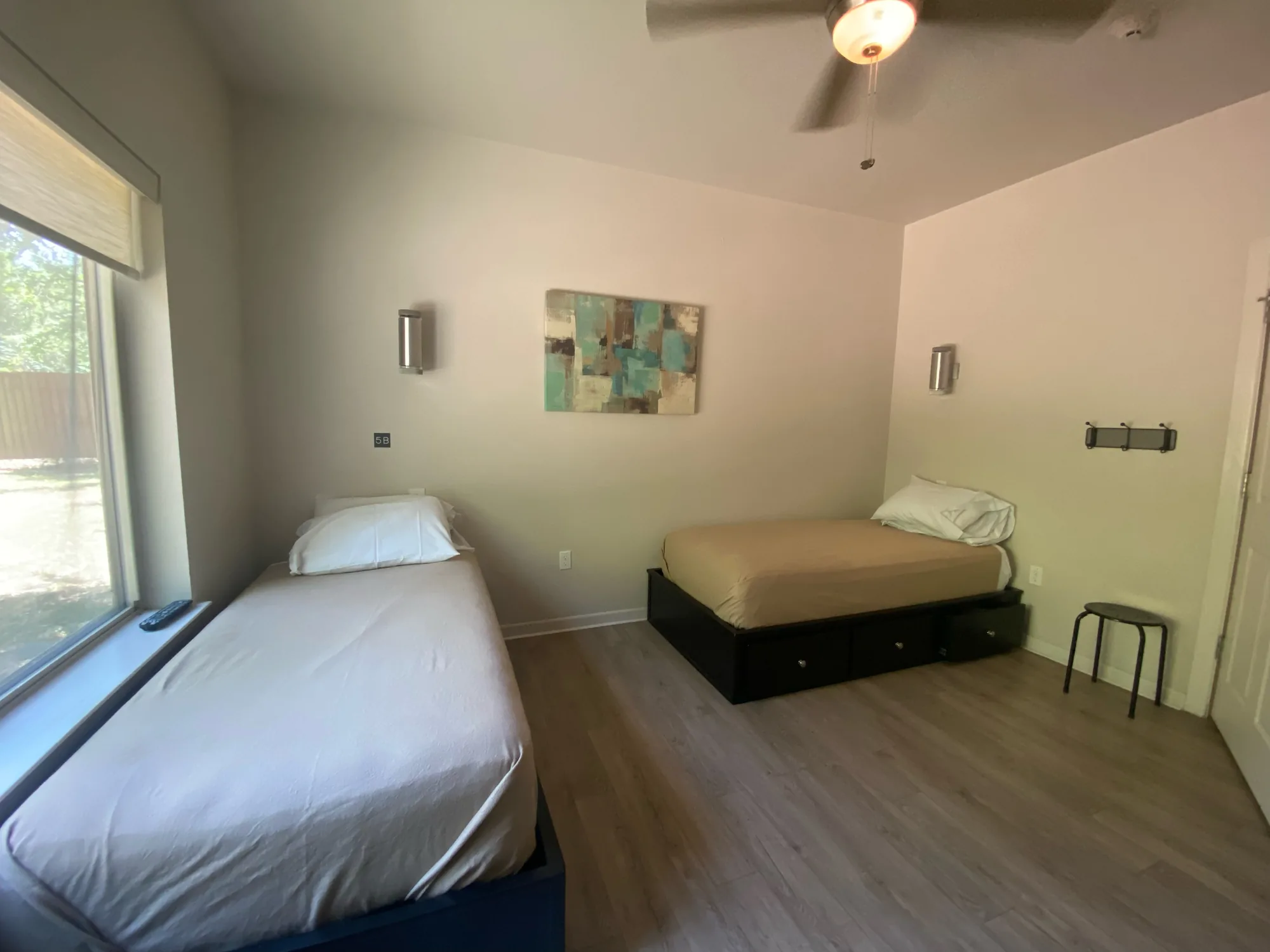
Before you arrive: what to expect from our detox covers the medical assessment, how long a stay usually runs, the privacy options and the rooms themselves.
Coverage
Our center is in-network with many insurances
Type your plan below to check it, or call and we will verify your benefits with your insurer directly. Free, and with no obligation to admit.



















Takes about two minutes · Or call (866) 710-7710

- Accredited The Joint Commission
- Rated 4.7 · 183 Google reviews Flourishing Foundations Recovery, now part of Briarwood
- Admissions 24 hours a day
A prescription does not make a drug easy to stop. Opioid painkillers, benzodiazepines and sleep medications, and prescription stimulants each produce dependence with regular use, each has its own withdrawal, and each needs a different approach in detox. This page sets out the three classes, who needs medical detox for them, what happens during a stay at Briarwood in Austin or Houston, and what follows.
Which prescription drugs need medical detox?
Prescription drugs that need medical detox fall into three classes: opioid painkillers, central nervous system depressants such as benzodiazepines and sleep medications, and stimulants prescribed for ADHD. Those are the three the National Institute on Drug Abuse identifies as commonly misused.
Opioids include oxycodone, hydrocodone, morphine, codeine, tramadol and fentanyl in its prescribed forms. Central nervous system depressants include the benzodiazepines, Xanax, Klonopin, Ativan and Valium, the sleep medications such as Ambien, and the barbiturates. Stimulants include Adderall, Ritalin and their relatives. The institute’s summary of dependence applies to all three: a person who is dependent will have unpleasant physical withdrawal symptoms when they abruptly reduce or stop the drug, the symptoms range from mild to severe depending on the drug, and they can usually be managed medically or avoided by tapering the dose slowly. Gabapentinoids such as Lyrica sit outside the three classes but follow the same rule.
Source: What classes of prescription drugs are commonly misused?, Misuse of Prescription Drugs Research Report, National Institute on Drug Abuse.
Do I need detox if I only took the medication as prescribed?
You may need detox even if you took the medication as prescribed, because dependence is a physical adaptation that does not require misuse, and benzodiazepine dependence can develop within weeks at prescribed doses. That last point is the FDA’s, from its 2020 boxed warning.
Dependence and addiction are different things. The National Institute on Drug Abuse distinguishes dependence, the body’s adaptation that produces withdrawal on stopping, from addiction, compulsive use despite harm. Many people prescribed opioids for pain or benzodiazepines for anxiety are dependent without being addicted, and they still cannot stop abruptly. For most of them, a prescriber’s taper is the right tool. Detox is for the cases where the taper has failed, the dose has climbed well past the prescription, more than one substance is involved, or the withdrawal is medically dangerous. The benzodiazepine detox page covers the class where that danger is highest.
Source: FDA requiring Boxed Warning updated to improve safe use of benzodiazepine drug class, U.S. Food and Drug Administration.
What are prescription drug withdrawal symptoms?
Prescription drug withdrawal symptoms follow the class: pain, insomnia, diarrhea and vomiting for opioids; rebound anxiety, insomnia and seizure risk for depressants; fatigue, depression and disturbed sleep for stimulants.
The National Institute on Drug Abuse’s lists are the reference. Opioid withdrawal brings restlessness, muscle and bone pain, insomnia, diarrhea, vomiting, cold flashes with goose bumps and involuntary leg movements. Central nervous system depressants slow brain activity, so stopping them produces a rebound: anxiety, insomnia, and in the worst cases seizures. Stimulant withdrawal brings fatigue, depression and disturbed sleep patterns, and repeated heavy misuse of stimulants can bring hostility, paranoia or psychosis. The three pictures barely overlap, which is why a single “prescription drug detox” protocol does not exist and why the assessment on arrival decides which one applies.
Which prescription drug withdrawal is dangerous?
Benzodiazepine and barbiturate withdrawal is the dangerous one, because abrupt discontinuation can cause life-threatening seizures; opioid withdrawal is severe but not life-threatening, and stimulant withdrawal’s risk is the depression that follows.
The FDA’s 2020 boxed warning for benzodiazepines states that stopping abruptly or reducing the dose too quickly can produce withdrawal reactions, including seizures, that can be life-threatening, and the National Institute on Drug Abuse says withdrawal from prolonged barbiturate use can have life-threatening complications. Opioid withdrawal is the opposite case: the National Library of Medicine describes it as very uncomfortable but not life threatening, with the real danger being the overdose that follows a relapse once tolerance has dropped.
Stimulant withdrawal is not medically dangerous in itself; its risk is a depression deep enough to bring suicidal thoughts, which is why it is watched rather than waited out. Each of those risks sets a different job for the medical team.
Source: Opiate and opioid withdrawal, MedlinePlus Medical Encyclopedia, National Library of Medicine.
What happens during prescription drug detox at Briarwood?
Prescription drug detox at Briarwood begins with an assessment that identifies the class and dose, then follows that class’s protocol: a substitution taper for sedatives, buprenorphine for opioids, supervised rest for stimulants.
For benzodiazepines and sleep medications, the protocol is a switch to a long-acting benzodiazepine or phenobarbital at an equivalent dose, then a monitored step-down, with vital signs checked around the clock because seizures can occur without warning. For opioid painkillers, buprenorphine is started once withdrawal has begun, with clonidine and other medication for the symptoms it does not cover; the opioid detox page describes it.
For stimulants, there is no substitution medication; detox is sleep, food, hydration, medication for anxiety or agitation if needed, and close attention to mood over the first week. Where more than one class is involved, which is common, the sedative or opioid protocol leads and the rest is managed alongside. A detox counselor meets with you individually and in group, and the what to expect page covers the rooms and the routine.
How long does prescription drug detox take?
Prescription drug detox at Briarwood usually takes five to seven days, shorter for stimulants and longer for benzodiazepine tapers, and the length is set after the medical assessment rather than quoted in advance.
Stimulant withdrawal is mostly over within a week and the stay is often shorter. Opioid painkiller withdrawal peaks around day three and has mostly receded by day five to seven. Benzodiazepine tapers are the ones that run longer, because the reduction is paced by the drug’s half-life and the dose, and a person on a long-acting benzodiazepine can be at their worst in the second week. Insurance typically covers medically necessary detox; the self-pay figures and how the insured figure is worked out are on how much detox costs.
Can I detox from prescription drugs as an outpatient?
You can detox from prescription drugs as an outpatient when the dose is moderate, there is no seizure history or second substance, and you have a stable home; Briarwood offers that in San Antonio. A prescriber’s taper serves many people without any program.
The honest ordering is this. A moderate prescribed dose with a cooperative prescriber usually needs a taper, not a detox center. A higher dose, a failed taper, or a stimulant or opioid taken alongside a sedative moves the case toward supervised care, and the San Antonio outpatient detox page describes the version with scheduled medical visits. A benzodiazepine at a high dose, a previous withdrawal seizure, or heavy drinking alongside any of these is an inpatient case. The assessment on the first call sorts most people into one of those three in a few minutes.
What happens after prescription drug detox?
After prescription drug detox comes treatment for the condition the drug was prescribed for, pain, anxiety, insomnia or attention problems, with approaches that do not depend on the drug. Where dependence has become addiction, that is treated alongside.
Most people who arrive on a prescription drug had a real reason for the prescription, and it does not disappear when the taper ends. The step after detox is where that reason gets addressed: pain management without opioids, treatment for anxiety or insomnia without benzodiazepines, and where a substance use disorder has developed, residential treatment, an intensive outpatient program or sober living. Briarwood arranges that step before discharge, and the what comes after detox page lays the options out.
Where prescription drug detox happens
Both centers run the same medical protocol. Which one you go to is usually decided by where you are and which has a bed.
Straight answers
Prescription drug detox — common questions
Can you become dependent on a prescription you take exactly as directed?
Yes. Dependence is the body's adaptation to regular use and does not require misuse. The FDA notes benzodiazepine dependence can develop within days to weeks at prescribed doses. Dependence is managed by tapering; it is not the same as addiction.
Which prescription drug withdrawal is the most dangerous?
Benzodiazepines and barbiturates, because abrupt discontinuation can cause life-threatening seizures. Opioid withdrawal is severe but not life-threatening; the danger there is overdose after relapse.
Does Briarwood detox from Adderall?
Yes. Stimulant withdrawal brings fatigue, depression and disturbed sleep rather than a medical emergency, so detox is supervised rest with close attention to mood, usually shorter than a week.
How long does prescription drug detox take?
Usually five to seven days at Briarwood, shorter for stimulants and longer for benzodiazepine tapers. The length is set after the medical assessment.
Can I detox from prescription drugs at home?
With a prescriber's taper, many people can. Detox is for high doses, failed tapers, more than one substance, or a benzodiazepine or barbiturate at a dose where stopping is medically dangerous.