
Guide
How Long Does Nicotine Withdrawal Last? The Timeline, the Symptoms, and What Helps
Joint Commission accredited · In network with most major insurance · Admissions answered 24 hours a day

Published September 19, 2026
Nicotine withdrawal is short by the standards of this site. It is not dangerous, it does not need a hospital bed, and the worst of it is over inside a week. What it is, is relentless, and the people who fail at quitting usually fail in that first week because nobody told them the timeline. This page gives it, from the National Cancer Institute’s figures, and then covers the part that matters for Briarwood’s patients: quitting nicotine at the same time as alcohol or another drug.
How long does nicotine withdrawal last?
Nicotine withdrawal is usually worst in the first week, peaks in the first three days, and eases over two to four weeks, with brief cravings continuing for months in some people.
The National Cancer Institute’s summary is the clearest available. Symptoms are usually worst during the first week after quitting and peak during the first three days. From there the intensity drops over the first month. The negative feelings that come with quitting, which the research identifies as anger, frustration and irritability, peak within a week and may last two to four weeks. Everyone is different, and some people have withdrawal symptoms for several months, but the shape of the curve is the same for almost everyone: steep, early, and then a long tail of occasional cravings.
The tail is worth knowing about in advance. Occasional mild cravings can occur months or even years after quitting, and they are not a sign that withdrawal has come back. They are a cue, a place or a mood that used to mean a cigarette, and they pass whether or not you act on them.
Source: Tips for Coping with Nicotine Withdrawal and Triggers, National Cancer Institute.
What is the nicotine withdrawal timeline, day by day?
The nicotine withdrawal timeline runs from cravings within an hour or two of the last cigarette, through the hardest stretch on days two and three, to fading symptoms across weeks two to four.
The first hours: cravings can start within an hour or two of the last use of tobacco. Nicotine leaves the body quickly, which is why a smoker reaches for the next cigarette so soon, and why withdrawal begins the same day.
Days one to three: this is the peak. Cravings are frequent, irritability and restlessness are at their worst, sleep is disturbed, and concentration is poor. Heart rate and blood pressure can rise during a craving. Smokefree.gov, the federal quit-smoking service, identifies the first week as the period of highest risk of slipping and smoking a cigarette, and the first three days are the core of that week.
Days four to seven: the physical edge comes off. Cravings are still frequent but the constant background discomfort begins to ease, and sleep starts to settle for many people.
Weeks two to four: the negative mood, the irritability and the difficulty concentrating fade over this stretch. Appetite often increases and stays increased, which is why weight gain is a common complaint. Cravings become shorter and farther apart.
After a month: most people are through the withdrawal itself. What remains is habit and cue, and the occasional craving that arrives with a familiar situation.
Source: Managing Nicotine Withdrawal, Smokefree.gov, National Cancer Institute.
What are the symptoms of nicotine withdrawal?
Nicotine withdrawal symptoms are cravings, irritability and frustration, anxiety, low mood, restlessness, trouble concentrating, disturbed sleep, and increased appetite with weight gain.
Cravings are the defining symptom, and they are as much mental as physical: an urge to smoke that comes and goes, tied to the moments when a cigarette used to fit. The mood symptoms are the ones that surprise people. The research the National Cancer Institute cites finds anger, frustration and irritability to be the most common negative feelings after quitting, and Smokefree.gov adds that some people feel anxious or depressed. Feeling restless or jumpy and having trouble sleeping are common. Increased appetite is real, not imagined, and the weight gain that follows is one of the reasons people give for going back.
None of these are medically dangerous, which is the honest distinction between nicotine withdrawal and withdrawal from alcohol or benzodiazepines. Nicotine withdrawal is miserable and safe; those can be life-threatening. The detox program exists for the second kind.
Where we are
Detox centers across Texas
Three locations, each with its own admissions line and its own clinical team. Pick the one nearest you — or call and we will tell you which has a bed tonight.
-
 Inpatient
 Austin, TX
11711 N Lamar Blvd · 78753
- 15 beds
- On-site labs
- 24-hour medical staff
Drug & Alcohol Detox in Austin, TX
-
 Inpatient
 Houston, TX
1019 Ashland St · 77008
- On-site labs
- 24-hour medical staff
Drug Detox Center in Houston, TX
-
 Outpatient
 San Antonio, TX
6707 W Hausman Rd · 78249
- Outpatient detox with scheduled medical visits
- Outpatient treatment
Outpatient Drug & Alcohol Detox in San Antonio
Is vaping withdrawal different from cigarette withdrawal?
Vaping withdrawal is withdrawal from the same drug, nicotine, so the symptoms are the same; what differs is the dose, often higher with vapes, and the number of cues.
Many vapes deliver more nicotine per day than cigarettes did, and a vape can be used almost anywhere, so more moments in a day used to involve nicotine.
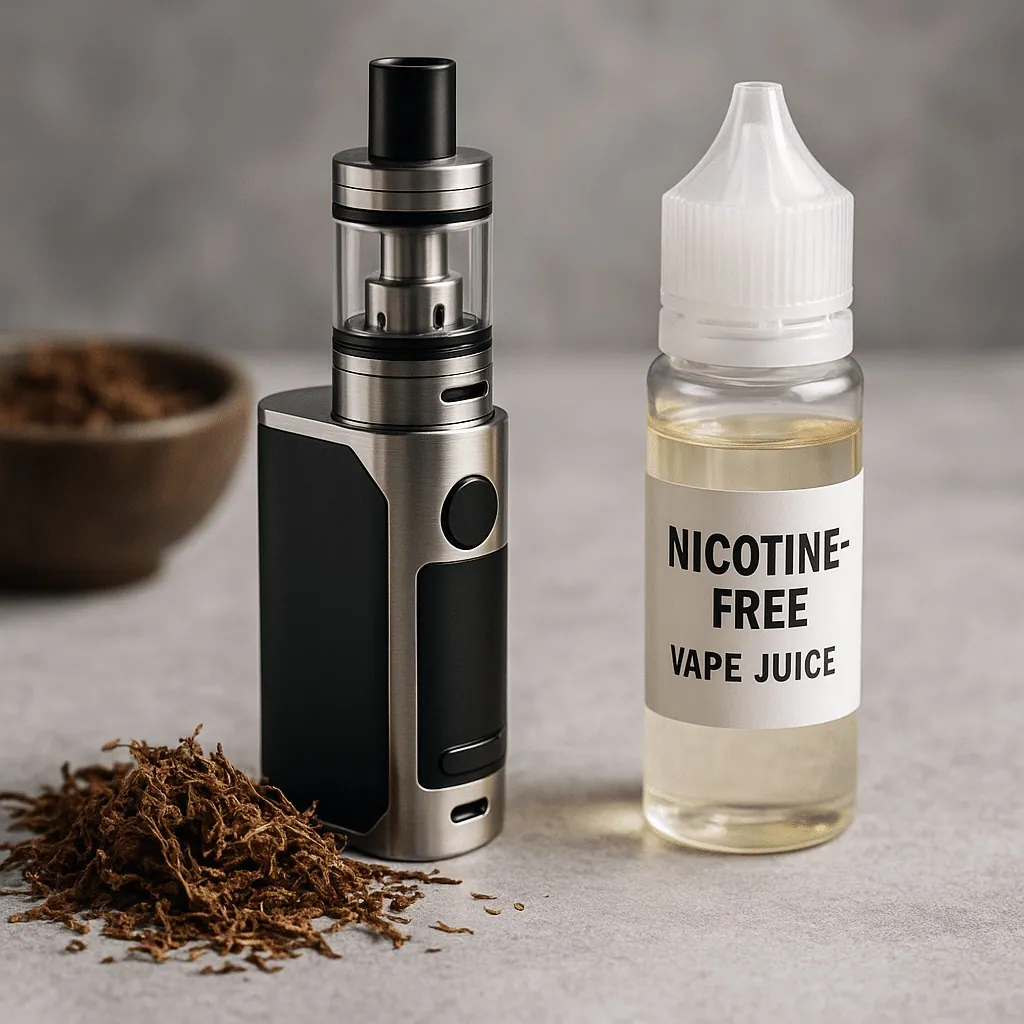
Smokefree.gov runs a separate quit-vaping program, but the withdrawal guidance in it is the guidance for nicotine, because that is what is being withdrawn from. Two practical consequences follow. A heavy vaper may be taking in more nicotine, more continuously, than a pack-a-day smoker, so the early days can be harder and nicotine replacement dosing needs to reflect actual use rather than a cigarette count. And because vaping has fewer natural limits, indoors, at a desk, in bed, there are more cues to plan for. Nicotine-free vapes are sometimes suggested as a bridge; the nicotine-free vapes page covers what they do and do not remove.
What helps nicotine withdrawal?
What helps nicotine withdrawal is a cessation medication plus behavioral support: the seven FDA-approved options roughly double quit rates, and combining one with counseling works better than either alone.
The 2020 Surgeon General’s report on smoking cessation is the reference. There are seven FDA-approved first-line medications: nicotine replacement in five forms, patch, gum, lozenge, nasal spray and inhaler, and two non-nicotine tablets, bupropion and varenicline. Patch, gum and lozenge are sold over the counter. Used properly, these medications generally double quit rates relative to placebo, with varenicline performing strongest in the pooled trials. Certain combinations of nicotine replacement, a long-acting patch plus a short-acting gum or lozenge for breakthrough cravings, outperform a single product. And the report’s central finding is that medication and behavioral support together outperform either alone, which is why every credible quit program offers both.
Behavioral support does not have to mean a clinic. The national quitline portal, 1-800-QUIT-NOW (1-800-784-8669), routes callers to their state’s free quitline, where trained counselors provide it by phone. Smokefree.gov offers text and app programs. Nicotine Anonymous applies the twelve steps to nicotine, which matters for people who already have a fellowship from another recovery.
Source: Interventions for Smoking Cessation and Treatments for Nicotine Dependence, Smoking Cessation: A Report of the Surgeon General, 2020.
Can you quit nicotine while in detox for alcohol or drugs?
You can quit nicotine during detox, and many people do, but stopping in the middle of alcohol or benzodiazepine withdrawal is a lot at once, so the timing is decided at the assessment.
Most people who come to a detox center smoke or vape, and many arrive intending to quit everything at once. That is a reasonable ambition, and for some people it works: the routines are already broken, there is medical staff on hand, and nicotine replacement can be started on day one. For others, adding nicotine withdrawal to alcohol or benzodiazepine withdrawal is more than they can carry in the same week, and stabilizing first, then addressing nicotine a few weeks into treatment, is the better sequence. Neither is a policy. What matters is that nicotine is on the plan, raised at the assessment, rather than a private decision made at a bad moment on day three. The nicotine cessation page describes how Briarwood handles that conversation.
One thing is specific to people in recovery from other substances: the low mood, poor sleep and irritability of nicotine withdrawal overlap with post-acute withdrawal from alcohol or opioids, and it can be hard to tell which is which. Knowing the nicotine timeline helps, because nicotine’s mood symptoms should be lifting by week four while post-acute symptoms run for months.
Does Briarwood treat nicotine withdrawal?
Briarwood treats nicotine withdrawal only alongside detox from alcohol or another drug, with nicotine replacement and a plan for after discharge; for nicotine alone, a quitline serves you faster.
Briarwood is a medical detox provider and does not run a standalone stop-smoking program, and it is better to say so than to sell one. If nicotine is the only thing on your list, 1-800-QUIT-NOW (1-800-784-8669), your primary care physician, or the Smokefree.gov programs will get you medication and counseling faster and at no cost. If nicotine sits alongside alcohol, opioids, benzodiazepines or another drug, it becomes part of the detox plan: nicotine replacement during the stay if you choose to quit now, and a cessation plan written into the step after detox if you choose to wait. Either way it is your decision, and the assessment is where it is made.
Common Questions
How long does nicotine withdrawal last?+–
Symptoms peak in the first three days, are worst during the first week, and ease over two to four weeks. Some people have symptoms for several months, and occasional mild cravings can occur long after that.
What day of nicotine withdrawal is the hardest?+–
Days two and three. The National Cancer Institute reports that symptoms peak during the first three days, and Smokefree.gov identifies the first week as the period of highest risk of slipping.
How long do nicotine cravings last after quitting?+–
Individual cravings come and go and pass on their own. They are frequent in the first days and weeks, get farther apart over the first month, and can recur occasionally for months or years when a familiar cue appears.
Is nicotine withdrawal dangerous?+–
No. It is uncomfortable but not medically dangerous, which distinguishes it from alcohol and benzodiazepine withdrawal, both of which can be life-threatening and are the reason medical detox exists.
Can I quit smoking while I am in detox at Briarwood?+–
Yes, and many people do, with nicotine replacement started during the stay. Others choose to stabilize first and quit nicotine a few weeks into treatment. Both are legitimate, and the timing is decided with you at the assessment.
Related guides
About the people behind this guide
Anna-Grace Washington
Medical Content Writer
Anna-Grace Washington is a Medical Content Writer for Briarwood Detox Center. She holds a master’s degree in clinical psychology from the University of Texas and brings a strong understanding of behavioral health, addiction recovery, and evidence-based treatment concepts to her writing.
In network with most major insurance
Find your plan and see what detox would cost
Most plans cover medical detox. Coverage varies by plan, so we verify it for you before you commit to anything.



















Don't see your plan? We work with out-of-network benefits and offer self-pay options — (866) 710-7710
- Confidential
- Takes about 2 minutes
- No obligation to admit

- Accredited The Joint Commission
- Rated 4.7 · 183 Google reviews Flourishing Foundations Recovery, now part of Briarwood
- Admissions 24 hours a day